

The Becker Friedman Institute for Economics (BFI) serves as a hub for cutting-edge analysis and research across the entire University of Chicago economics community, uniting researchers from the Booth School of Business, the Kenneth C. Griffin Department of Economics, the...
Inspired by our namesakes, Nobel Laureates Gary Becker and Milton Friedman, who believed that economics research could help improve the world, BFI works with the Chicago Economics community to turn its evidence-based research into real-world impact.
The Predoctoral Research in Economics Program (PREP) is intended to serve as a bridge between college and graduate school for students interested in empirical economics. The program offers unique research and professional training opportunities at the University of Chicago.
Expanding Discovery in Economics+ (EDE+) brings together a diverse group of early undergraduate students to hone their research abilities and technical skills.
Julie Pernaudet, John List, Arnoldo Müller-Molina, Majid Ahmadi, Imrul Huda, Ajay Sailopal, and Dana Suskind
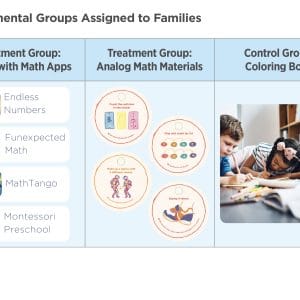
Parents play a critical role in shaping children’s skills during the first years of life. Yet, identifying the contributors to richer learning environments remains difficult due to various unobservable factors. In this paper, we combine field experiments with AI to...
Kristina Butaeva, Steven Durlauf, and Alexander Shapoval
This paper examines intergenerational mobility across social classes during the late Qing dynasty employing a remarkable data set from Liaoning province in Northeast China. We identify two distinct epochs with markedly different mobility dynamics. Before 1850, mobility patterns exhibited stability...
Joel P. Flynn, Georgios Nikolakoudis, and Karthik A. Sastry
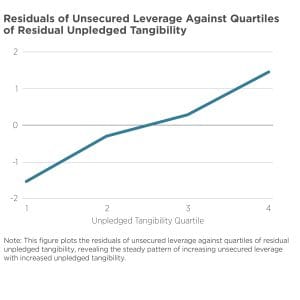
Modern theories of the business cycle do not allow for the simultaneous rational choice of both prices and quantities, instead assuming that an “invisible hand” determines one of these variables to clear markets. In this paper, we develop a macroeconomic...
Captivating and informative videos on the latest insights and trends as well as the tested stock of knowledge in economics from leaders in academia, policy, business, and the media.
Event·Mar 8, 2019, 12:00 AM·University of Chicago Booth School of Business, Charles M. Harper Center, Room C25
Gender and the Labor Market Conference
Mar82019
This conference explored a range of topics at the intersection of gender and labor economics, including gender gaps in labor market outcomes, gender discrimination, family/household economics, marriage, social insurance, and social norms.
Video
Video
Agenda
Friday, March 8, 2019
08:30:00
REGISTRATION AND BREAKFAST
09:00:00–09:50:00
All the Single Ladies: Job Promotions and the Durability of Marriage
The Becker Friedman Institute for Economics (BFI) serves as a hub for cutting-edge analysis and research across the entire University of Chicago economics community, uniting researchers from the Booth School of Business, the Kenneth C. Griffin Department of Economics, the...
Inspired by our namesakes, Nobel Laureates Gary Becker and Milton Friedman, who believed that economics research could help improve the world, BFI works with the Chicago Economics community to turn its evidence-based research into real-world impact.
The Predoctoral Research in Economics Program (PREP) is intended to serve as a bridge between college and graduate school for students interested in empirical economics. The program offers unique research and professional training opportunities at the University of Chicago.
Expanding Discovery in Economics+ (EDE+) brings together a diverse group of early undergraduate students to hone their research abilities and technical skills.
Julie Pernaudet, John List, Arnoldo Müller-Molina, Majid Ahmadi, Imrul Huda, Ajay Sailopal, and Dana Suskind
Parents play a critical role in shaping children’s skills during the first years of life. Yet, identifying the contributors to richer learning environments remains difficult due to various unobservable factors. In this paper, we combine field experiments with AI to...
Kristina Butaeva, Steven Durlauf, and Alexander Shapoval
This paper examines intergenerational mobility across social classes during the late Qing dynasty employing a remarkable data set from Liaoning province in Northeast China. We identify two distinct epochs with markedly different mobility dynamics. Before 1850, mobility patterns exhibited stability...
Joel P. Flynn, Georgios Nikolakoudis, and Karthik A. Sastry
Modern theories of the business cycle do not allow for the simultaneous rational choice of both prices and quantities, instead assuming that an “invisible hand” determines one of these variables to clear markets. In this paper, we develop a macroeconomic...
Captivating and informative videos on the latest insights and trends as well as the tested stock of knowledge in economics from leaders in academia, policy, business, and the media.