
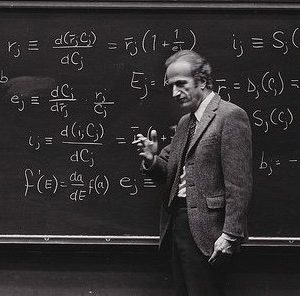
A select group of great innovators have produced more than one major contribution. These exceptional individuals are known far beyond their own disciplines, and are routinely described as unique. Yet although their extraordinary accomplishments obviously make them outliers, the processes by which they arrive at their discoveries follow patterns that are shared by innovators more generally. This paper examines these patterns for six great serial innovators of the modern era: the experimental Henry Ford, who worked tirelessly by trial and error to make better cars more efficiently, and the conceptual Albert Einstein, Pablo Picasso, Walt Disney, Miles Davis, and Steve Jobs, who formulated surprising new ideas and products by connecting previously unrelated elements. These contrasting methods of discovery resulted in sharply contrasting life cycles of creativity, as Einstein, Picasso, Disney, Davis, and Jobs all made major contributions during their 20s, but Ford did not make his first great innovation until he was 45.

More on this topic

BFI Working Paper·Jun 2, 2026

Non-User Externalities

Leonardo Bursztyn, Jan Fasnacht, Benjamin R. Handel, Rafael Jiménez-Durán, Aaron Leonard, Filip Milojević, Christopher Roth, and Cass R. Sunstein
Topics: Technology & Innovation
BFI Working Paper·Jun 2, 2026

Beyond Exposure: Predicting AI Adoption Based on Comparative Advantage

Ilse Lindenlaub, Ryungha Oh, María Alejandra Rodríguez, and Laura Veldkamp
Topics: Technology & Innovation
BFI Working Paper·May 27, 2026

The AGI Race and Existential Risk

Ethan Bueno de Mesquita, Wioletta Dziuda, and Mattias Polborn
Topics: Technology & Innovation