
The Becker Friedman Institute for Economics (BFI) serves as a hub for cutting-edge analysis and research across the entire University of Chicago economics community, uniting researchers from the Booth School of Business, the Kenneth C. Griffin Department of Economics, the...
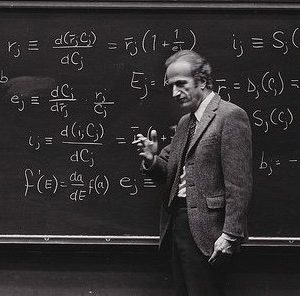
Inspired by our namesakes, Nobel Laureates Gary Becker and Milton Friedman, who believed that economics research could help improve the world, BFI works with the Chicago Economics community to turn its evidence-based research into real-world impact.
The Predoctoral Research in Economics Program (PREP) is intended to serve as a bridge between college and graduate school for students interested in empirical economics. The program offers unique research and professional training opportunities at the University of Chicago.
Expanding Discovery in Economics+ (EDE+) brings together a diverse group of early undergraduate students to hone their research abilities and technical skills.
Juanma Castro-Vincenzi, Adry Gracio, Gaurav Khanna, and Nitya Pandalai-Nayar
We study how aggregate risk shapes production, trade, and input sourcing in complex supply chains. We develop a quantitative model of sequential production under risk, where each stage sources inputs from multiple origins. Analytically, we first show that sourcing shares...
Ingvil Gaarder, Lancelot Henry de Frahan, Magne Mogstad, Alexander Torgovitsky, and Oscar Volpe
We revisit the classic identification problem of separating supply and demand for a homogeneous good using data from multiple markets. We allow markets to be heterogeneous according to unobservables, a feature that arises if there are unobservable differences in consumer...
Evaluating optimized AI systems for asset pricing is fundamentally difficult for two reasons. First, models are trained on all data, implying that any backtest or analysis using historical data suffers from look-ahead bias. In addition, markets are reflexive — as...
Captivating and informative videos on the latest insights and trends as well as the tested stock of knowledge in economics from leaders in academia, policy, business, and the media.
The Becker Friedman Institute for Economics serves as a hub for cutting-edge analysis and research across the entire University of Chicago economics community, uniting researchers from the Booth School of Business, the Kenneth C. Griffin Department of Economics, the Harris School of Public Policy, and the Law School in an unparalleled effort to uncover new ways of thinking about economics. We put those ideas into action by translating rigorous research into accessible and relevant formats, and proactively disseminating it to key decision-makers around the world.
Our Legacy
For decades, UChicago economists have questioned conventional wisdom and produced bold, even revolutionary ideas. The Becker Friedman Institute for Economics builds on this tradition, supporting innovative research to inspire a future of powerful new ideas.
Visitors & Fellows
Counting over 20 Nobel laureates among its faculty of economics, UChicago is the global hub for frontier research. BFI supports collaboration in the field by hosting non-faculty scholars through our Saieh Family Fellows, Distinguished Research Fellows, and Visiting Scholars programs.
Predoctoral Research in Economics Program (PREP)
PREP is intended to serve as a bridge between college and graduate school for students interested in empirical economics. The program offers unique research and professional training opportunities at the University of Chicago.
Opportunities for Students
BFI offers a variety of opportunities for students, including the internship and research assistantship programs.
Our Team
BFI is guided by leading scholars from throughout the UChicago community and an advisory board of business leaders with a range of backgrounds.
Kenneth C. Griffin Distinguished Service Professor in Economics and the College, Kenneth C. Griffin Department of Economics, Director, Becker Friedman Institute for Economics; Director, BFI Experimental Economics Program
The Becker Friedman Institute for Economics (BFI) serves as a hub for cutting-edge analysis and research across the entire University of Chicago economics community, uniting researchers from the Booth School of Business, the Kenneth C. Griffin Department of Economics, the...
Inspired by our namesakes, Nobel Laureates Gary Becker and Milton Friedman, who believed that economics research could help improve the world, BFI works with the Chicago Economics community to turn its evidence-based research into real-world impact.
The Predoctoral Research in Economics Program (PREP) is intended to serve as a bridge between college and graduate school for students interested in empirical economics. The program offers unique research and professional training opportunities at the University of Chicago.
Expanding Discovery in Economics+ (EDE+) brings together a diverse group of early undergraduate students to hone their research abilities and technical skills.
Juanma Castro-Vincenzi, Adry Gracio, Gaurav Khanna, and Nitya Pandalai-Nayar
We study how aggregate risk shapes production, trade, and input sourcing in complex supply chains. We develop a quantitative model of sequential production under risk, where each stage sources inputs from multiple origins. Analytically, we first show that sourcing shares...
Ingvil Gaarder, Lancelot Henry de Frahan, Magne Mogstad, Alexander Torgovitsky, and Oscar Volpe
We revisit the classic identification problem of separating supply and demand for a homogeneous good using data from multiple markets. We allow markets to be heterogeneous according to unobservables, a feature that arises if there are unobservable differences in consumer...
Evaluating optimized AI systems for asset pricing is fundamentally difficult for two reasons. First, models are trained on all data, implying that any backtest or analysis using historical data suffers from look-ahead bias. In addition, markets are reflexive — as...
Captivating and informative videos on the latest insights and trends as well as the tested stock of knowledge in economics from leaders in academia, policy, business, and the media.