




Faculty Directors
 John List, Kenneth C. Griffin Distinguished Service Professor in Economics and the College, Kenneth C. Griffin Department of Economics, Director, BFI View Bio |
 Chad Syverson, George C. Tiao Distinguished Service Professor, Booth School of Business, Deputy Director, BFI View Bio |
Staff
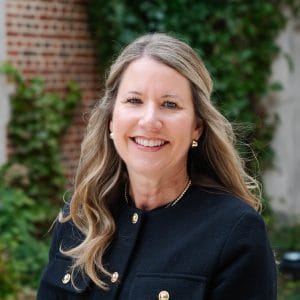 Kristin Troutman, Program Director Kristin is the Program Director for the Becker Friedman Institute for Economics (BFI) Gracias Center for Human Development Incubator and the Kenneth C. Griffin Applied Economics Incubator. In this role, she leads the development and execution of faculty research initiatives that generate innovative ideas to advance academic research and influence policy. Kristin facilitates collaboration among researchers, scholars, and professionals to advance research on timely economic themes. Since joining the University of Chicago in 2010, Kristin has managed and implemented a range of research projects within the Kenneth C. Griffin Department of Economics and the TMW Center for Early Learning + Public Health. Prior to joining the University of Chicago, Kristin worked in the education system for over a decade. She earned a BS from Northern Illinois University and a MSW from University of Illinois at Chicago. Over the years, she has found personal fulfillment in contributing to meaningful research that seeks to create lasting, positive change in the world. |
About
The University of Chicago Becker Friedman Institute for Economics (BFI) is proud to launch the Gracias Center for Human Sciences and Well-Being, established through a transformational gift from the Gracias Family Foundation. By focusing on both beliefs and scaling, the Center will deepen understanding of human development, well-being, and the drivers of positive outcomes worldwide.
The Center will ask rigorous questions about beliefs: How can we measure them? How do they change? Where are they biased? And why do they matter? Equally, it will address the challenge of scaling: Which ideas succeed at scale? Why do some fail? And how can proven solutions reach more people?
The Gracias Center builds on BFI’s tradition of supporting and advancing frontier economic research and sharing world-changing ideas to help inform pressing challenges of the day. Using the innovative research model developed by the Kenneth C. Griffin Applied Economics Incubator, the Center will accelerate data-driven discoveries that lead to meaningful improvements in human flourishing and mobility.
“This generous gift from the Gracias Family Foundation will allow us to expand the innovative research model developed by the Kenneth C. Griffin Applied Economics Incubator, which focuses resources on one critical issue at a time, thus accelerating actionable, data-driven solutions to the most pressing societal challenges.”
John List, Director, BFI
Supporting the Faculty Directors and leading the development and execution of faculty research initiatives to generate innovative ideas to advance academic research and influence policy is the Center’s Program Director, Kristin Troutman. For more than a decade, Kristin has managed and implemented a range of UChicago research projects at the intersection of economics and education. She earned a BS from Northern Illinois University and a MSW from University of Illinois at Chicago, and also served as a school social worker prior to joining UChicago. In addition to her responsibilities in support of the Gracias Center, Kristin continues to support the Department of Economics as the Program Director of the Kenneth C. Griffin Applied Economics Incubator.
Current Research
Catalyzing Global Science on Caregivers’ Beliefs and Child Development
The challenge
What caregivers know and believe about child development shapes how they engage with children, which in turn influences cognitive, linguistic, and social-emotional outcomes. Measuring those beliefs consistently across cultures remains difficult.
Our approach
In collaboration with the TMW Center for Early Learning + Public Health, we are advancing the Survey of Parent/Provider Expectations and Knowledge (SPEAK), a computer-adaptive tool that assesses caregiver knowledge across five domains: language and literacy, socioemotional development, STEM learning, child-technology interaction, and dual language learning. With support from the Gracias Center, we are:
- translating and culturally adapting the SPEAK
- enhancing the platform for broader scale
- funding data collection across diverse populations
- convening conferences to build a global research community
The goal
To generate cross-cultural evidence on caregiver beliefs, embed the SPEAK in studies across economics, psychology, education, and public policy, and assess how emerging technologies like AI align with developmental science. The work will inform intervention design and policy and help reduce human capital disparities worldwide.
CLARITY: A Belief-Informed AI Video Tool to Strengthen Trust in Healthcare
The challenge
Trust in the U.S. healthcare system has declined for decades, and time-strapped clinicians have little room for the conversations that rebuild it.
Our approach
CLARITY (Clinician-Led AI Resources Individualized To You) converts clinician-verified information from post-visit notes into brief, personalized videos tailored to each patient’s diagnosis, language, literacy level, and cultural context. Through experiments and pragmatic trials in oncology and pediatric surgery at the University of Chicago Medicine, we will test how these videos, along with speaker accent, message framing, and the communication of uncertainty, affect patient understanding, trust, and adherence.
The goal
To combine behavioral science, clinical expertise, and responsible AI design into an evidence-based pathway for using generative AI to complement the patient-clinician relationship.
Shaping Beliefs Around AI to Guide Constructive Usage and Integration into Tutoring at Scale
The challenge
High-dosage tutoring is among the most effective tools for closing achievement gaps, but students’ and parents’ beliefs about AI can lead to disengagement or over-reliance, undermining learning gains.
Our approach
Led by Leonardo Bursztyn in partnership with The Reading Institute, University Tutoring Collaborative, Iowa Department of Education, and CUNY Reading Fellows, the team will work with an expected 5,000 K–10 students across multiple school districts. We will first measure how students and parents understand AI tutoring tools, then design and test interventions to shift those beliefs. A randomized controlled trial will compare human tutoring alone, AI alone, and human tutoring combined with AI. Primary outcomes include beliefs, engagement, and standardized reading scores.
The goal
To identify how to shape beliefs about AI so that it supports, rather than replaces, effective learning.
Related
Associated Scholars

Ufuk Akcigit

Chris Blattman


Leonardo Bursztyn


Manasi Deshpande

Joshua Gottlieb


Ariel Kalil

Anne Karing

John List


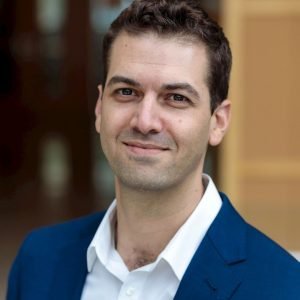
Chad Syverson


Michael Weber
Associated Research
Capital-Skill Complementarity Beyond Firm Boundaries
The Enjoyment Paradox: College-Educated Mothers Invest More in Their Children’s Learning and Enjoy It Less
Why Bans Fail: Tipping Points and Australia’s Social Media Ban
Associated Insights
Associated News
Gracias Incubator Announces Two New Research Awards
Center Spotlight: Gracias Center for Human Sciences and Well-Being
Other Initiatives & Centers at BFI
Research Initiatives
- Public Economics Initiative
- Socioeconomic Inequalities Initiative
- Political Economics Initiative
- Industrial Organization Initiative
- Macroeconomic Research Initiative
- Ronzetti Initiative for the Study of Labor Markets
- Price Theory Initiative
- International Economics and Economic Geography Initiative
- Health Economics Initiative
- Big Data Initiative